EN
EN
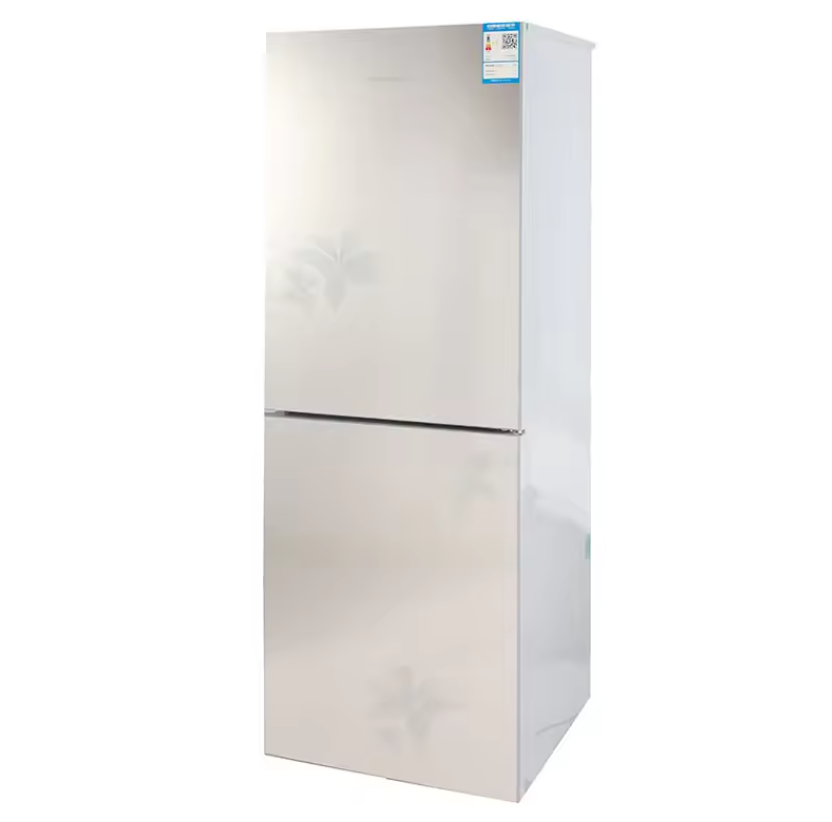
Manufacturing partnerships in the cooling appliance industry require careful navigation of production constraints, supply chain rhythms, and commercial thresholds that directly impact project feasibility and profitability. For businesses seeking to launch private-label cooling solutions or expand their product portfolios through contract manufacturing, understanding the operational realities of minimum order quantities and production timelines becomes essential to strategic planning and financial success. These two factors—MOQs and lead times—serve as the foundational pillars upon which successful Refrigerator OEM collaborations are built, influencing everything from initial capital requirements to market entry speed and inventory management strategies.
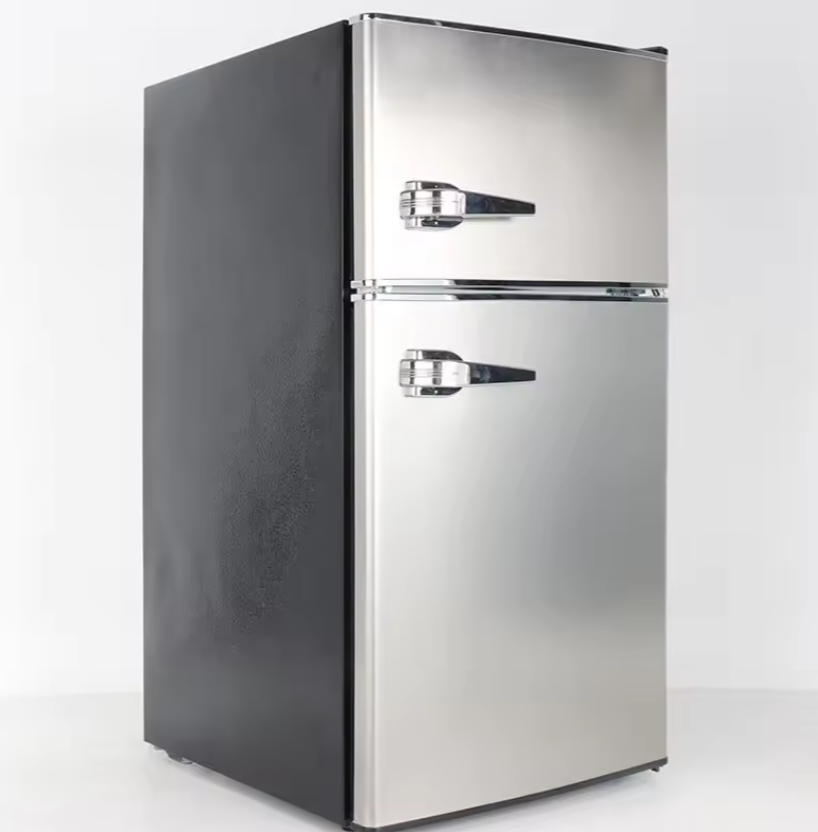
The complexity of coordinating production volumes with manufacturer capabilities while simultaneously managing customer expectations and market demand creates a delicate balancing act that separates successful projects from costly failures. Refrigerator OEM partnerships involve intricate supply chain dependencies, component sourcing constraints, production capacity planning, and quality assurance protocols that all converge to determine the practical boundaries of what manufacturers can deliver and when they can deliver it. This comprehensive exploration examines the strategic considerations, negotiation approaches, risk mitigation techniques, and operational planning methodologies that enable businesses to effectively manage these critical project parameters while building sustainable and profitable manufacturing relationships.
Understanding Minimum Order Quantities in Refrigerator Manufacturing
Economic Drivers Behind MOQ Requirements
Manufacturing economics in the cooling appliance sector create inherent threshold requirements that protect both manufacturer viability and production efficiency. Every Refrigerator OEM facility operates with fixed costs including tooling amortization, production line setup, quality control systems, and workforce allocation that must be distributed across sufficient unit volumes to achieve acceptable per-unit economics. These fixed costs represent substantial investments in molds for plastic components, stamping dies for metal parts, specialized assembly fixtures, and testing equipment that may require tens or hundreds of thousands of dollars in upfront capital expenditure before a single unit can be produced.
The relationship between production volume and unit cost follows a predictable curve where initial units bear disproportionate overhead burdens while successive units benefit from economies of scale. This economic reality compels manufacturers to establish minimum order thresholds that ensure production runs achieve sufficient scale to recover tooling investments, optimize material purchasing leverage, and maintain acceptable profit margins. For businesses entering Refrigerator OEM partnerships, understanding these economic drivers provides essential context for negotiating realistic order quantities that align with both manufacturer capabilities and market demand projections.
Component Sourcing and Supply Chain Constraints
The complex bill of materials required for modern refrigeration units creates additional layers of MOQ considerations beyond simple production economics. A typical cooling appliance contains hundreds of individual components sourced from specialized suppliers including compressors from thermal system manufacturers, electronic control boards from electronics specialists, door seals from polymer fabricators, and countless fasteners, switches, and trim pieces from diverse vendors. Each of these component suppliers maintains their own minimum order requirements, creating a cascading effect that influences the practical floor for finished unit production.
Refrigerator OEM manufacturers must coordinate component procurement across this extensive supply network, often committing to component volumes that support multiple production runs or multiple client projects simultaneously. This procurement reality means that custom specifications requiring unique components may face significantly higher MOQ thresholds compared to standard configurations using commonly stocked parts. Businesses planning private-label projects must therefore carefully consider specification choices and their impact on minimum order feasibility, balancing differentiation desires against volume accessibility and cost implications.
Customization Levels and Their MOQ Impact
The degree of product customization requested directly correlates with minimum order quantity requirements, creating a strategic spectrum from standard white-label units to fully custom-engineered solutions. Standard configurations using existing molds, established component suppliers, and proven production processes typically allow for lower MOQ thresholds since tooling investments have already been amortized across previous production runs and component sourcing follows established channels. These opportunities provide accessible entry points for businesses testing new markets or operating with constrained capital resources.
Conversely, projects requiring custom exterior dimensions, unique door configurations, specialized interior layouts, or proprietary control systems necessitate dedicated tooling investments and component development that dramatically increase MOQ requirements. A Refrigerator OEM manufacturer might accept orders for five hundred units of a standard model while requiring five thousand units for a custom-tooled variant, reflecting the need to recover substantially higher upfront investments. Strategic planning must therefore address the trade-off between product differentiation and volume accessibility, often pursuing a phased approach that begins with standard configurations before progressing to custom solutions as market validation and volume growth justify the investment.
Lead Time Components and Production Scheduling
Pre-Production Phase Duration
The journey from signed contract to production commencement involves multiple sequential activities that collectively determine the pre-production timeline for Refrigerator OEM projects. This critical phase begins with detailed specification finalization where technical drawings, component selections, performance parameters, and quality standards are documented with precision sufficient to guide manufacturing execution. Engineering teams on both client and manufacturer sides must align on every dimensional tolerance, material specification, and functional requirement to prevent costly mid-production discoveries of misalignment.
Following specification approval, tooling fabrication begins for any custom molds, dies, or fixtures required for the specific project configuration. This manufacturing step alone may consume six to twelve weeks depending on complexity, requiring specialized machining operations, trial runs, and iterative refinements to achieve production-ready quality. Simultaneously, component procurement proceeds through vendor selection, sample approval, and bulk ordering processes that must account for the lead times of upstream suppliers. For Refrigerator OEM projects involving custom compressors or electronic controls, this procurement phase may extend the pre-production timeline by several additional weeks or months.
Production Execution and Quality Assurance
Once all preparatory elements align, actual production execution begins with pilot runs designed to validate tooling performance, assembly procedures, and quality control protocols before committing to full-scale manufacturing. These initial production batches serve as critical checkpoints where any specification issues, assembly challenges, or performance shortfalls can be identified and corrected with minimal waste. Experienced Refrigerator OEM partners allocate explicit time for this pilot phase, recognizing that rushing from tooling completion to mass production without adequate validation frequently results in costly rework or rejected batches.
Full-scale production throughput depends on factory capacity allocation, workforce availability, and the complexity of the specific model being manufactured. A straightforward single-door compact unit might achieve production rates of several hundred units daily when assigned dedicated line capacity, while complex multi-door units with advanced features may require substantially longer per-unit assembly time. Quality assurance protocols integrated throughout the production process add incremental time requirements, with performance testing, refrigerant leak checks, electrical safety verification, and cosmetic inspection extending the timeline between component arrival and finished unit availability.
Logistics and Shipping Considerations
The transition from factory completion to customer delivery involves logistics coordination that adds weeks to the overall project timeline, particularly for international Refrigerator OEM partnerships. Ocean freight, the predominant shipping method for appliance volumes, requires container booking, port transit, customs clearance, and inland transportation that collectively span four to eight weeks depending on origin-destination pairs and seasonal capacity constraints. Air freight alternatives offer dramatic timeline compression but at cost premiums that typically prove prohibitive for volume appliance shipments given their size and weight characteristics.
Documentation preparation including commercial invoices, packing lists, certificates of origin, and product compliance certifications must be coordinated in advance of shipment departure to prevent customs delays at destination ports. For businesses inexperienced with international trade protocols, these administrative requirements represent potential sources of unexpected timeline extension if not managed proactively. Strategic Refrigerator OEM partners often provide logistics support or coordination services that streamline this phase, leveraging established relationships with freight forwarders and customs brokers to minimize transit time variability.
Strategic Approaches to MOQ Negotiation
Volume Commitment Structuring
Effective negotiation of minimum order quantities requires creative structuring that addresses manufacturer economic requirements while accommodating buyer capacity and risk tolerance. One proven approach involves multi-phase commitment structures where initial orders at higher per-unit costs establish the relationship and validate market demand, with contractual provisions for subsequent orders at reduced MOQs and improved pricing once cumulative volume thresholds are achieved. This progression allows businesses to enter Refrigerator OEM partnerships with manageable initial inventory investments while creating clear pathways to improved economics as the relationship matures.
Another strategic framework involves annual volume commitments distributed across multiple delivery schedules rather than single large shipments. A manufacturer might reduce MOQ requirements if a buyer commits to a total annual volume of five thousand units delivered quarterly in batches of twelve hundred fifty units, providing production planning visibility that justifies the accommodation. This approach offers buyers inventory management advantages by spreading capital deployment and warehouse requirements across the year while giving manufacturers the volume certainty needed to justify tooling investments and component procurement.
Specification Optimization for Volume Accessibility
Thoughtful specification development can substantially influence MOQ requirements by maximizing alignment with manufacturer standard offerings and existing supply chain relationships. Businesses willing to accept standard cabinet dimensions, proven compressor selections, and established color options typically access significantly lower volume thresholds compared to those requesting custom configurations. This strategic compromise between differentiation and accessibility proves particularly valuable for market entry phases where demand validation remains uncertain and capital conservation takes priority over maximum product distinctiveness.
The approach of progressive customization offers another pathway where initial orders use standard Refrigerator OEM configurations with differentiation limited to branding elements, packaging design, and minor cosmetic variations that require minimal tooling investment. As market success and volume growth materialize, subsequent phases introduce increasingly customized features justified by proven demand and accumulated capital. This methodology reduces initial risk exposure while creating opportunities for meaningful differentiation as the business case strengthens.
Collaborative Problem-Solving with Manufacturing Partners
Transparent dialogue about business constraints, market conditions, and growth projections enables manufacturing partners to identify creative solutions that standard negotiating positions might overlook. A Refrigerator OEM manufacturer understanding a buyer's capital limitations and market uncertainty might propose shared tooling arrangements where costs are amortized across multiple clients using similar base configurations, or phased tooling investments where initial production uses temporary fixtures with permanent tooling commissioned after market validation. These collaborative approaches transform MOQ discussions from adversarial negotiations into joint problem-solving exercises.
Some manufacturers offer portfolio approaches where buyers commit to multiple product variants with combined volumes meeting MOQ thresholds even though individual SKU volumes fall short. This strategy proves particularly effective for businesses pursuing multi-tier product strategies or serving diverse market segments, allowing broader catalog coverage without proportionally increased capital requirements. The key to unlocking these flexible arrangements lies in building relationships characterized by mutual transparency, aligned incentives, and long-term partnership orientation rather than transactional dynamics focused solely on immediate order terms.
Lead Time Management and Risk Mitigation
Production Schedule Coordination
Effective lead time management begins months before desired delivery dates through proactive production schedule coordination with Refrigerator OEM manufacturing partners. Factories operate with capacity constraints and existing client commitments that create booking windows requiring advance reservation to secure desired production slots. Businesses waiting until inventory depletion before initiating reorders frequently discover that immediate production capacity is unavailable, forcing acceptance of extended timelines that may result in stock-outs and lost sales opportunities.
Strategic buyers establish rolling forecast communication with manufacturing partners, providing visibility to anticipated order timing and volumes that enable proactive capacity allocation and component procurement. This collaborative planning approach benefits both parties by allowing manufacturers to optimize production scheduling and material purchasing while giving buyers confidence in delivery timeline reliability. The relationship evolves from reactive order placement to proactive capacity partnership, dramatically improving timeline predictability and reducing emergency expedition requirements that often carry cost premiums.
Buffer Stock and Inventory Strategy
The inherent lead time realities of Refrigerator OEM manufacturing necessitate inventory strategies that maintain buffer stock sufficient to cover consumption during replenishment cycles plus safety margins for demand variability and logistics delays. Businesses accustomed to domestic just-in-time supply chains often underestimate the inventory investment required to support international manufacturing partnerships, discovering too late that their working capital allocation proves insufficient to maintain stock availability through multi-month replenishment cycles.
Calculating appropriate buffer stock levels requires analysis of demand patterns, lead time variability, and acceptable stock-out risk tolerance. A conservative approach might maintain inventory covering four months of average sales when total lead time from order placement to delivery spans three months, providing both replenishment coverage and cushion for demand surges or logistics delays. This inventory investment represents a significant capital commitment that must be factored into project financial planning, often surprising businesses accustomed to asset-light operational models.
Contingency Planning and Alternative Scenarios
Robust lead time management incorporates contingency planning for scenarios that might extend timelines beyond baseline expectations, including component shortages, quality issues requiring rework, logistics disruptions, or unexpected demand surges consuming buffer inventory faster than anticipated. Developing response protocols for these situations before they occur enables rapid, effective action rather than crisis-driven improvisation when problems emerge.
Some businesses establish relationships with multiple Refrigerator OEM manufacturers to create sourcing redundancy, accepting the complexity of managing parallel partnerships in exchange for reduced supply chain vulnerability. Others negotiate contractual provisions for expedited production with associated cost premiums, creating options to accelerate timelines when business conditions justify the expense. The specific contingency measures appropriate for each situation depend on factors including market dynamics, competitive intensity, capital availability, and risk tolerance, but the common thread involves proactive scenario planning rather than reactive crisis management.
Financial Planning for MOQ and Lead Time Realities
Capital Requirement Modeling
The intersection of minimum order quantities and extended lead times creates substantial working capital requirements that must be accurately modeled during project financial planning. A business committing to a three-thousand-unit MOQ with a four-month total lead time effectively locks capital in inventory for an extended period before sales revenue begins flowing. This capital commitment spans the manufacturing payment schedule, shipping costs, customs duties, and warehousing expenses, creating a comprehensive financial obligation that may reach hundreds of thousands or millions of dollars depending on product value and volume.
Effective financial modeling incorporates detailed cash flow projections that account for payment terms with Refrigerator OEM manufacturers, typical structures requiring deposits at order placement and balance payments at production completion or shipment. These payment milestones must be coordinated with anticipated sales revenue timing, considering that inventory monetization begins only after units clear customs, reach distribution facilities, and move through sales channels to end customers. The lag between capital deployment and revenue realization often extends six months or more, requiring either substantial equity capital or credit facilities to bridge the gap.
Pricing Strategy and Margin Protection
The capital intensity and volume commitments inherent in Refrigerator OEM partnerships necessitate pricing strategies that ensure adequate margin protection to justify the investment and compensate for the financial risk undertaken. Businesses must resist the temptation to pursue aggressive market share growth through deep discounting that undermines profitability, recognizing that volume growth creating insufficient margins to support ongoing inventory replenishment and working capital requirements ultimately leads to business failure despite apparent market success.
Margin protection becomes particularly critical when managing long lead times that create exposure to exchange rate fluctuations, component cost variations, or logistics rate changes between order placement and product sales. Some businesses negotiate fixed pricing arrangements with manufacturing partners covering defined periods, accepting potentially higher base costs in exchange for budget certainty. Others employ hedging strategies for currency exposure or build contingency margins into retail pricing that absorb moderate cost fluctuations without requiring customer-facing price adjustments that might damage market positioning.
Return on Investment Timeline
Realistic assessment of return on investment timelines for Refrigerator OEM projects must account for the extended period between initial capital deployment and profitability achievement. The first order cycle involves upfront investments in product development, tooling where applicable, initial inventory procurement, regulatory compliance, marketing launch, and channel development that collectively consume substantial resources before generating meaningful revenue. Subsequent cycles benefit from amortized development costs and established market presence, but working capital remains perpetually deployed in inventory throughout the business lifecycle.
Conservative financial planning assumes break-even achievement requires multiple replenishment cycles, often spanning eighteen to thirty-six months from initial launch depending on market conditions, competitive intensity, and sales velocity. This extended timeline to positive returns demands patience from stakeholders and sufficient capital reserves to sustain operations through the maturation period. Businesses underestimating this timeline frequently encounter funding crises as initial capital depletes before profitability materializes, forcing disadvantageous financing arrangements or premature business termination despite viable underlying market opportunities.
FAQ
What factors most significantly influence MOQ requirements in Refrigerator OEM partnerships?
The degree of product customization represents the most significant MOQ driver, with standard configurations using existing tooling and common components allowing substantially lower minimums compared to custom-engineered solutions requiring dedicated mold investments. Component sourcing constraints also create meaningful impact, as suppliers of specialized parts like compressors or control systems maintain their own minimum order requirements that cascade through to finished unit volumes. Manufacturing economics including tooling amortization, production efficiency curves, and fixed cost distribution further influence MOQ determination, with manufacturers requiring sufficient volumes to achieve acceptable per-unit profitability.
How can businesses reduce lead times for Refrigerator OEM projects?
Lead time reduction begins with proactive production scheduling and rolling forecast communication that enables manufacturers to allocate capacity and procure components in advance of firm orders. Specification choices emphasizing standard components with reliable supply availability rather than custom parts requiring extended procurement timelines also compress overall project duration. Air freight for finished goods or critical components offers dramatic timeline acceleration compared to ocean shipping, though at substantial cost premiums that must be justified by business urgency. Establishing strategic partnerships with responsive manufacturers who prioritize timeline reliability and maintain adequate capacity buffers provides structural advantages over transactional relationships with overburdened facilities.
What are common pitfalls when navigating MOQ requirements for the first time?
Underestimating the total working capital requirement represents the most common and potentially fatal pitfall, with businesses calculating only the product purchase cost while overlooking shipping, duties, warehousing, and the extended period before inventory converts to revenue. Overestimating market demand and committing to aggressive volumes that exceed realistic sales capacity creates excess inventory that ties capital and may eventually require liquidation at losses. Failing to negotiate contractual provisions for future orders at improved terms or reduced MOQs as relationships mature also proves problematic, leaving businesses locked into unfavorable economics despite growing volumes. Inadequate attention to payment term structures and milestone timing can create cash flow crises even when overall project economics remain sound.
How should businesses approach MOQ negotiation with limited purchasing power?
Transparency about constraints combined with long-term partnership commitment often unlocks flexible arrangements that aggressive negotiating tactics cannot achieve, as manufacturers value relationships with growth potential over maximum immediate margins. Accepting higher per-unit pricing for initial lower-volume orders while establishing contractual frameworks for graduated pricing as cumulative volumes increase provides manufacturers adequate returns while managing buyer risk exposure. Specification optimization that maximizes alignment with manufacturer standard offerings and existing supply relationships substantially reduces MOQ requirements compared to custom configurations. Exploring shared tooling arrangements where costs distribute across multiple clients or phased tooling investment where temporary fixtures support initial production before permanent tooling justification may also create accessible entry pathways.
Table of Contents
- Understanding Minimum Order Quantities in Refrigerator Manufacturing
- Lead Time Components and Production Scheduling
- Strategic Approaches to MOQ Negotiation
- Lead Time Management and Risk Mitigation
- Financial Planning for MOQ and Lead Time Realities
-
FAQ
- What factors most significantly influence MOQ requirements in Refrigerator OEM partnerships?
- How can businesses reduce lead times for Refrigerator OEM projects?
- What are common pitfalls when navigating MOQ requirements for the first time?
- How should businesses approach MOQ negotiation with limited purchasing power?